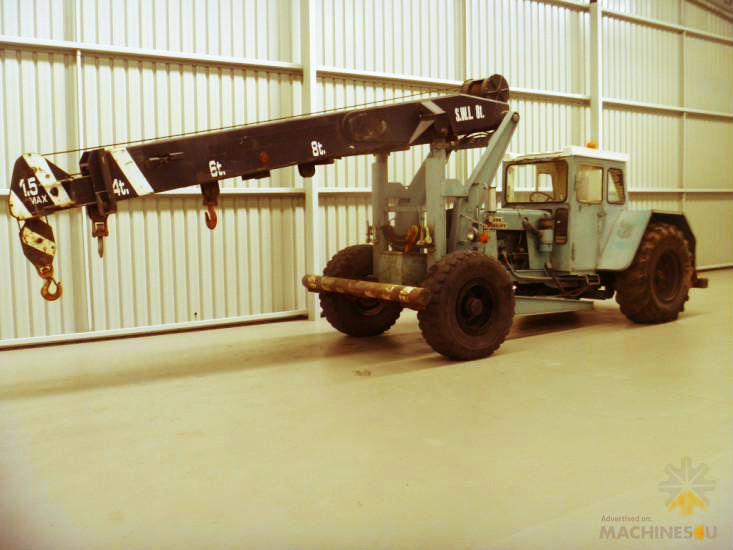
The mechanical crawler crane also includes a jib that is used for providing support for the fixed pulley block. Multiple cables are wrapped around the fixed block. When the cable is being pulled either by hand or by a machine, the pulley system transfer force to the load that is being lifted, and that force is equal to the applied force but multiplied by the number of cables that pass between two or more blocks. The number is actually the created mechanical advantage. The hydraulic cylinder can be used either to lift the load or to move the jib of the mechanical crawler crane.
The mechanical crawler crane like any other mechanical machine, obey to the principle of energy conservation. This means that the energy that is being transferred to the load is not bigger than the energy used by the crane. For example, when the pulley system multiplies the force by ten, the load is moved only by one tenth of the applied force. Or in other words, the output energy is kept equal to the input energy.
For stability when lifting loads, the total weight of the load needs to be less then the weight that can cause the crane to tip over. This load is called rated load. The stability rated load is usually 75% of the tipping load. For different mechanical crawler crane models, this rated load is different.